
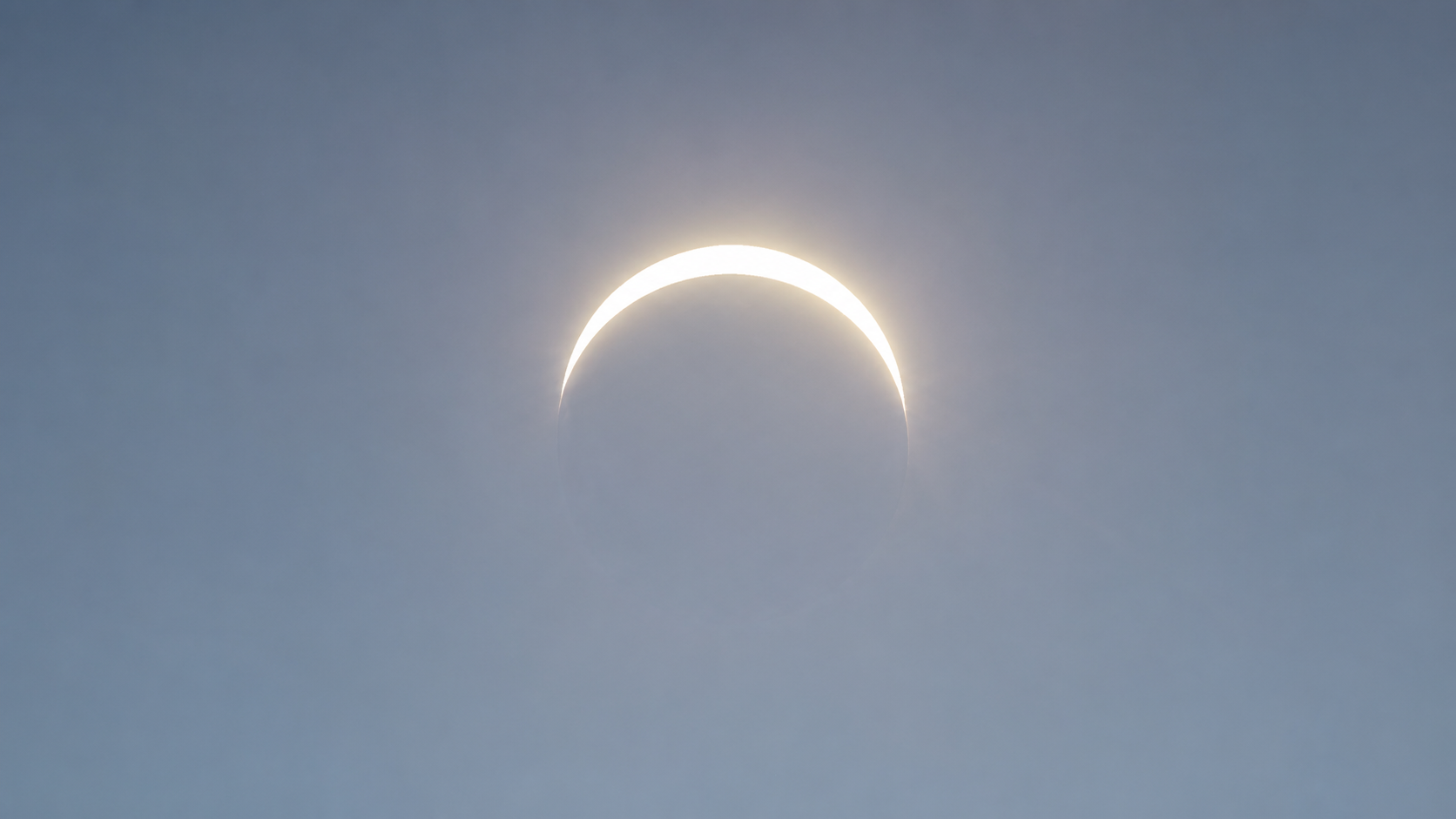
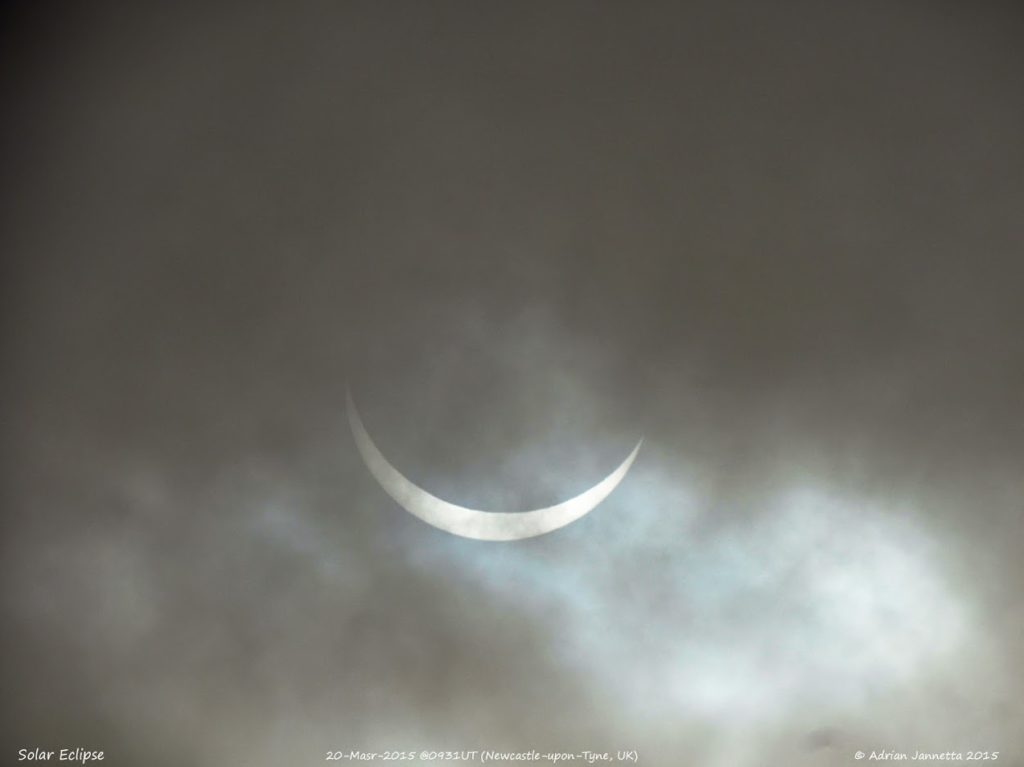
August 2026 brings two fine astronomical events to the skies over Northumberland. On Wednesday 12 August, the Moon will cover most of the Sun in a deep partial solar eclipse. Just over two weeks later, during the early hours of Friday 28 August, the full Moon will pass through the shadow of the Earth.
The two eclipses will be quite different affairs. The solar eclipse takes place at a convenient hour in the evening, but must be watched using proper eye protection. The lunar eclipse is perfectly safe to view, but requires an early start and a clear view towards the western horizon.
Partial solar eclipse (12-August)
The first event is part of a total solar eclipse whose narrow path crosses northern Russia, Greenland, Iceland, the Atlantic Ocean, northern Spain and a small corner of Portugal. Within that narrow band, the Moon will completely cover the Sun for a minute or two.
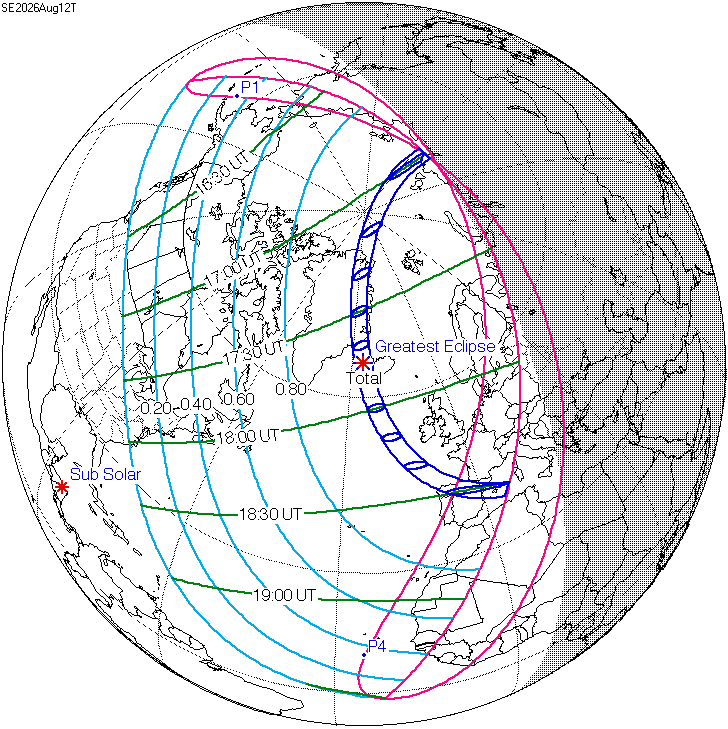
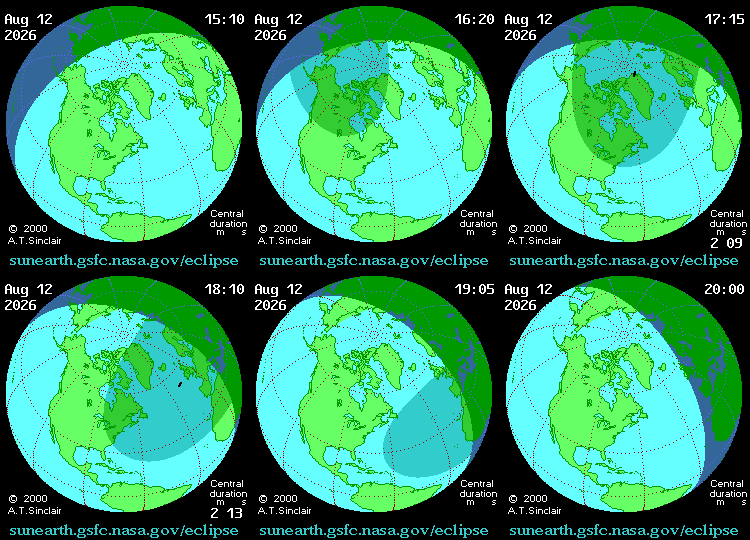
The UK lies outside the path of totality, but the eclipse seen here will still be a substantial one. In Northumberland, more than nine-tenths of the Sun’s diameter will be covered at maximum eclipse, leaving a brilliant, narrow crescent shining in the western sky.
The solar eclipse times for Northumberland are:
- Partial eclipse begins: 6.09 pm
- Maximum eclipse: 7.06 pm
- Partial eclipse ends: 8.00 pm
The eclipse will unfold slowly. At first, a small dark notch will appear on the right-hand edge of the Sun. Over the following hour, the Moon will move steadily across the solar disc until only a slender arc of sunlight remains.
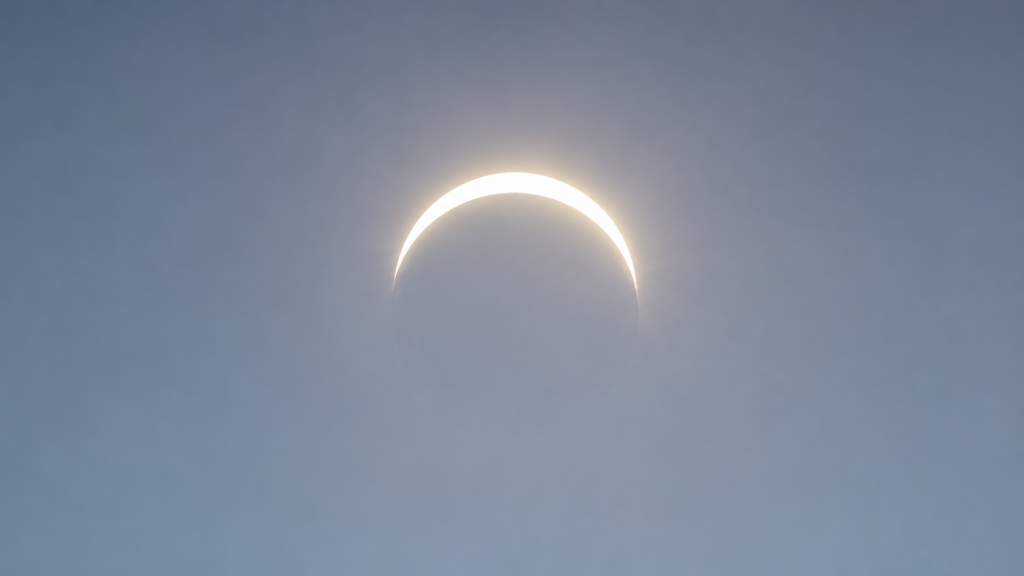
Although most of the Sun will be hidden, it will not become completely dark. The remaining crescent will still be intensely bright. Nevertheless, the daylight may begin to look distinctly peculiar. Colours can become subdued, shadows may sharpen and the temperature may fall slightly. The countryside may take on the appearance of an unexpectedly early evening.
Finding a good place to watch
The Sun will be fairly low in the west-north-western sky throughout the eclipse. A clear horizon will therefore be important.
Look for an open site without trees, buildings or hills blocking the western view. A hilltop, open moor or broad stretch of countryside may provide a suitable outlook. It is worth checking the location beforehand at about the same time of evening, since even a fairly distant ridge can hide a low Sun.
The eclipse ends before sunset in Northumberland, so the whole event should be visible from a suitably open location.
How to watch the solar eclipse safely
Never look directly at the Sun without proper solar-viewing equipment. This remains true even when more than 90 per cent of the Sun is hidden. The remaining crescent is bright enough to cause permanent damage to the retina at the back of the eye.
Use genuine eclipse glasses or a handheld solar viewer carrying the recognised ISO 12312-2 safety marking. Ordinary sunglasses, smoked glass, exposed photographic film and improvised filters are not safe.
Check eclipse glasses before using them. Do not use glasses that are scratched, torn, punctured or coming apart at the edges.
Binoculars, telescopes and cameras require particular care. Eclipse glasses must never be used while looking through an optical instrument. The lenses concentrate the Sun’s light and can damage both the filter and the eye. Any telescope, binoculars or camera used to view the eclipse must have a purpose-made solar filter fitted securely over the front of the instrument.
Watching by projection
A simple and safe alternative is to project an image of the Sun. Make a small hole in a piece of card and allow sunlight to pass through it onto a second card or another pale surface. There’s an example here. You can make something more sophisticated (click here!) The projected spot will gradually change from a circle into a crescent as the eclipse progresses.
A kitchen colander produces dozens of tiny solar crescents. The gaps between leaves can do the same thing, scattering little images of the eclipsed Sun across the ground. These methods are safe because you watch the projected image rather than looking at the Sun itself.
Partial lunar eclipse (28-August)
The second eclipse occurs during the early hours of Friday 28 August. This time, Earth passes between the Sun and the Moon. The Moon then moves through the long shadow cast by our planet into space.
The solar eclipse times for Northumberland are:
- Penumbral eclipse begins: 2.23 am
- Partial eclipse begins: 3.33 am
- Maximum eclipse: 5.12 am
- Moonset: 6.14 am
The first stage begins when the Moon enters the pale outer part of Earth’s shadow, known as the penumbra. This early shading will be slight and may be difficult to detect.
The more obvious part of the eclipse begins at about 3.33am, when the curved edge of Earth’s dark central shadow starts to cross the Moon. This darker shadow is called the umbra.
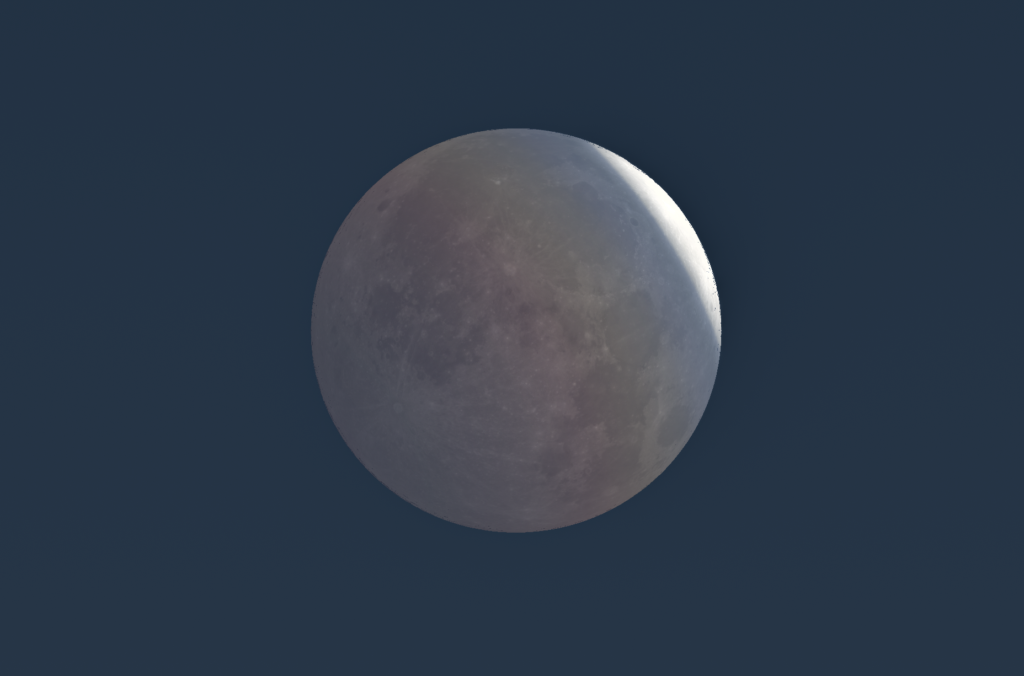
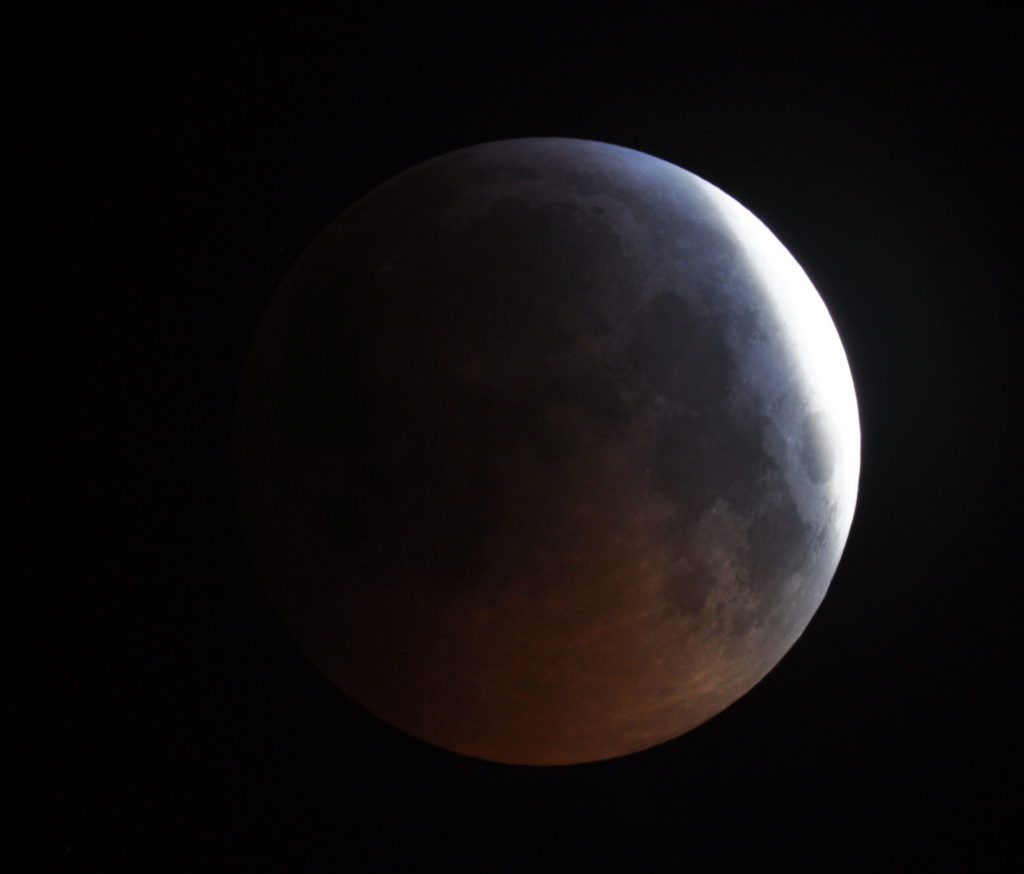
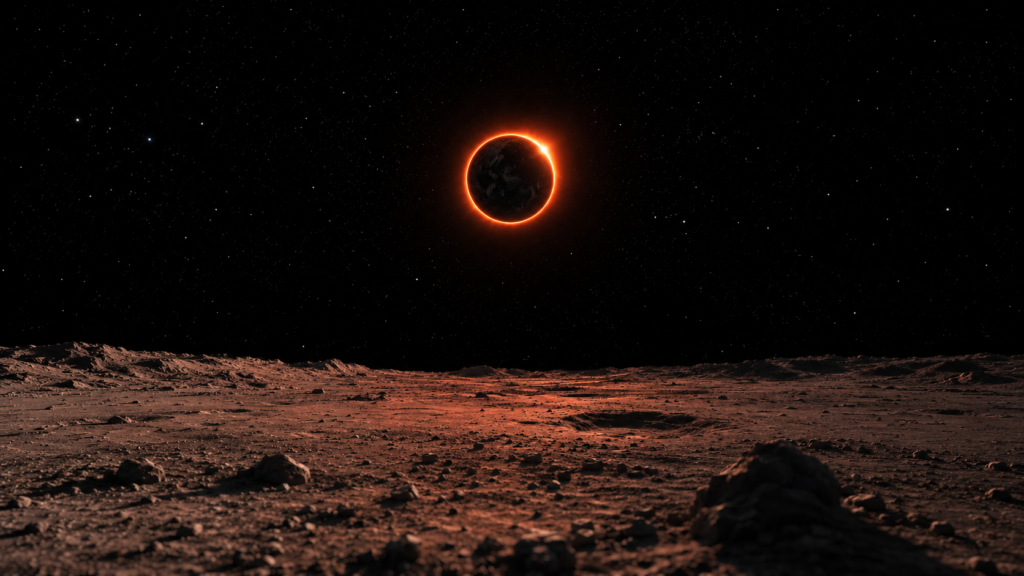
By maximum eclipse at 5.12am, almost the whole diameter of the Moon will be immersed in the umbra. Only a narrow bright cap will remain outside the darkest part of Earth’s shadow. The event is therefore likely to resemble a total lunar eclipse, even though the Moon never becomes completely covered.
Much of the eclipsed Moon may take on an orange, copper or reddish colour. The exact appearance cannot be predicted, as it depends partly upon the amount of cloud, dust and pollution in Earth’s atmosphere.
A blood moon?
The red colour is produced by sunlight passing through the atmosphere around the edge of the Earth. The atmosphere scatters much of the blue light but bends some of the remaining red and orange light into the shadow. Total lunar eclipses can also feature subtle turquoise colours because sunlight passing through the ozone layer of our atmosphere absorbs the red and orange components of sunlight.
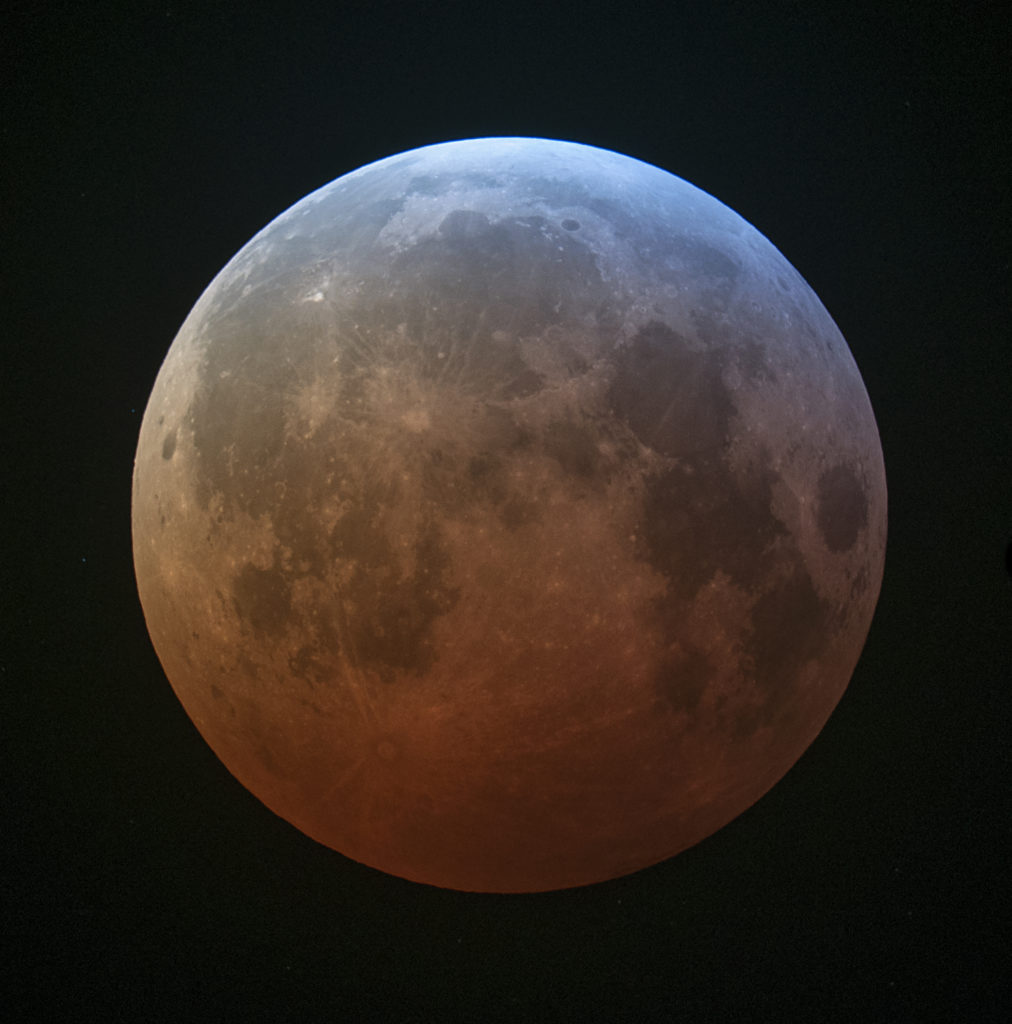
In effect, the light of all the sunrises and sunsets taking place around the edge of the Earth is being projected onto the Moon.
Finding the moon
The main difficulty will be the Moon’s position. At maximum eclipse it will be only about seven degrees above the west-southwestern horizon. For comparison, a clenched fist held at arm’s length covers roughly ten degrees of sky.
A low, unobstructed western horizon will therefore be essential. Buildings, hills and even fairly distant trees may hide the Moon during the most interesting part of the eclipse.
Dawn will also be brightening the sky. As the Moon becomes both darker and lower, it may become surprisingly difficult to see with the unaided eye. Binoculars should help to pick it out, particularly during the final stages before moonset.
The best period for observation is likely to be between about 4.30am and 5.30am. By then the eclipse will be deep, but the Moon will not yet have reached the immediate horizon.
Unlike a solar eclipse, a lunar eclipse is completely safe to watch with the naked eye, binoculars or a telescope. No filter is needed.
Why do the eclipses occur so close together?
Solar and lunar eclipses often arrive in pairs because they occur during an eclipse season. This is a period during which the orbit of the Moon is lined up favourably with the Sun and Earth.
At new Moon on 12 August, the Moon passes between Earth and the Sun, producing the solar eclipse. Half an orbit later, at full Moon on 28 August, the Moon has reached the opposite side of the Earth and passes through our planet’s shadow.
This does not happen every month because the Moon’s orbit is tilted by about five degrees relative to Earth’s orbit around the Sun. During most months, the Moon passes slightly above or below the perfect alignment required to produce an eclipse.
A memorable month under Northumberland skies
The two eclipses offer contrasting demonstrations of the same celestial geometry. On 12 August, the dark Moon will cross the brilliant face of the Sun during the evening. On 28 August, the shadow of our own planet will sweep across the full Moon as dawn approaches.
As ever in Northumberland, the weather will have the final word. Yet eclipses develop slowly, and even a brief opening between the clouds may reveal something worthwhile.
With a safe solar viewer prepared for the first event, an alarm clock set for the second and a clear western horizon for both, August 2026 should provide two excellent opportunities to watch the machinery of the Solar System in action.
Wishing you clear skies!
Dr Adrian Jannetta FRAS
External links
- 12-August Solar Eclipse 3D map (timeanddate)
- 12-August Solar Eclipse 2D map (timeanddate)
- 28-August Lunar Eclipse 3D map (timeanddate)
- 28-August Lunar Eclipse 2D map (timeanddate)


Leave a Reply
Your email is safe with us.