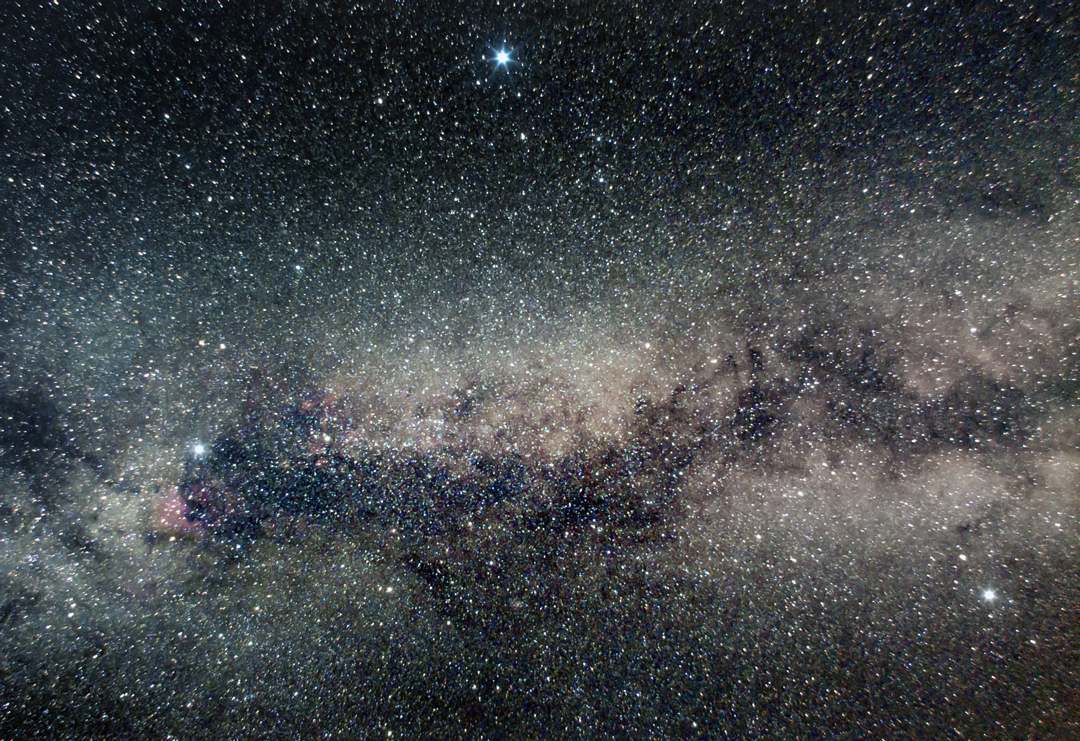
On a clear night in Northumberland, under some of the darkest skies in England, the stars feel close enough to touch. The Milky Way stretches overhead like a faint river of light, and for a moment it’s easy to believe we’re seeing the universe as it truly is.
But we’re not.
What we see with our eyes is only a tiny fraction of what’s really out there. In fact, most of the universe is completely invisible to us.
This article is a journey into that hidden cosmos – the “invisible universe” – and how astronomers have learned to see it.
Light: the Universe’s Messenger
To understand the invisible universe, we first need to understand light.
For much of human history, people didn’t even agree on how vision worked. Ancient thinkers like Plato believed our eyes sent out rays to “feel” objects. Others imagined ghostly copies of objects drifting into our eyes. It wasn’t until around the 11th century that the scientist Ibn al-Haytham correctly explained that light travels from objects into our eyes – a simple but revolutionary idea .
This insight changed everything. Light became more than just something we see; it became a messenger, carrying information about the world.
Every star, galaxy, and nebula tells its story through its light. The challenge is learning how to read that story.
How fast is light?
Light moves incredibly fast — about 300,000 kilometres per second. That’s so quick that even early scientists struggled to measure it.
Galileo tried using lanterns on distant hills, timing how long it took light to travel between them. The result? Nothing measurable. Light was simply too fast.
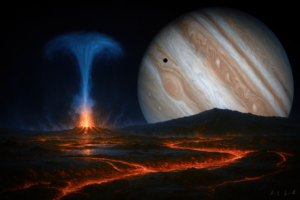
Later, astronomer Ole Rømer found a clever workaround. By studying the timing of Jupiter’s moons, he noticed that their eclipses appeared slightly early or late depending on Earth’s position. The reason? Light had further to travel at certain times of year.
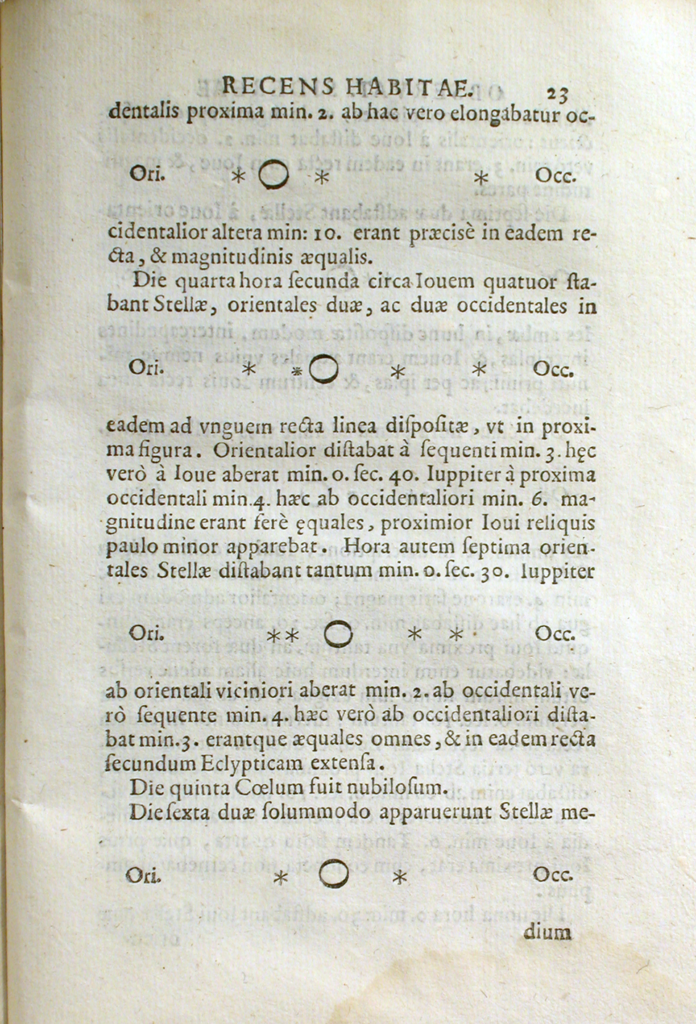
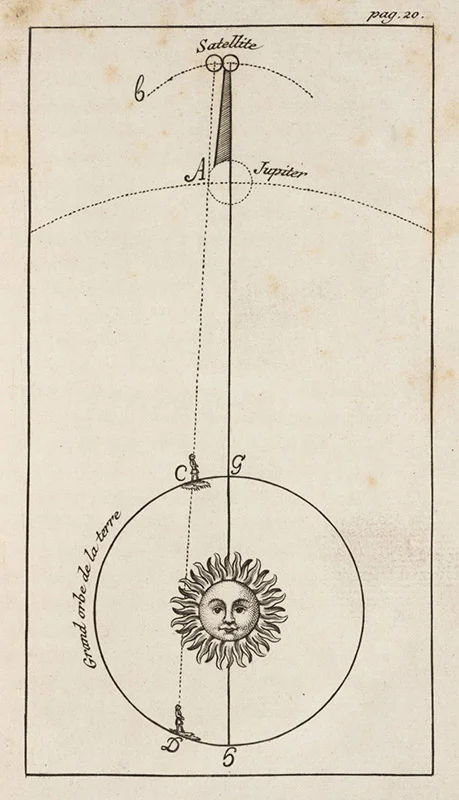
From this, he made the first real estimate of the speed of light — and got surprisingly close.
This discovery revealed something profound: when we look at the universe, we are looking back in time.
Waves, particles…or both?
Light behaves in ways that can feel almost contradictory.
Sometimes it acts like a wave — spreading out, bending around obstacles, and creating interference patterns (like ripples overlapping on water). Other times it behaves like a stream of particles, called photons, arriving in tiny packets of energy.
Rather than choosing one or the other, modern physics accepts both. Light is what’s called a quantum object — it behaves like a wave when travelling, but like particles when detected.
It’s strange, but it works. And it’s essential knowledge when astronomers later built telescopes and detectors to see the invisible universe.
The Electromagnetic Spectrum
In the 19th century, James Clerk Maxwell made one of the most important discoveries in physics: light is an electromagnetic wave — a ripple in electric and magnetic fields moving through space.
But visible light is just one small part of a much larger family called the electromagnetic spectrum.
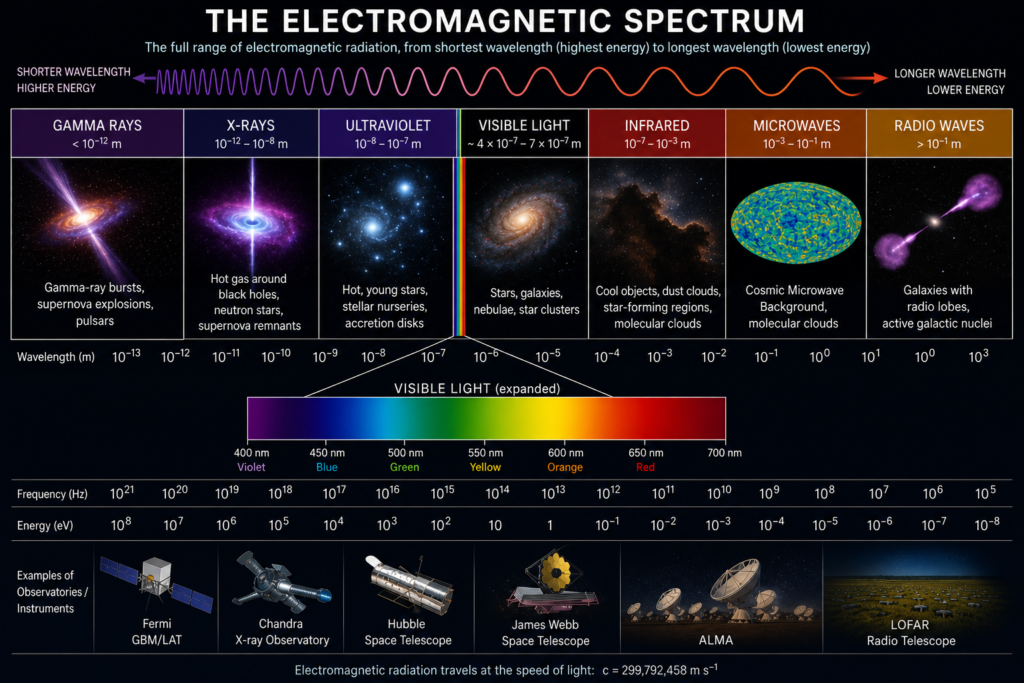
This spectrum includes:
- Gamma rays – extremely energetic, from violent cosmic events
- X-rays – from hot gas and black holes
- Ultraviolet (UV) – from very hot stars
- Visible light – the tiny slice our eyes can detect
- Infrared (IR) – heat radiation
- Microwaves – including relic radiation from the Big Bang
- Radio waves – from cold gas and magnetic fields
If visible light were stretched out to just one metre across, infrared would extend across a town, microwaves across a country, and radio waves beyond the Moon.
In other words, what we see is just a narrow window in a vast cosmic landscape.
Everything glows
Here’s a surprising idea: everything in the universe emits light.
Even objects that feel cold — like a rock or a person — are glowing. The reason we don’t see it is because they emit light in the infrared, which our eyes can’t detect.
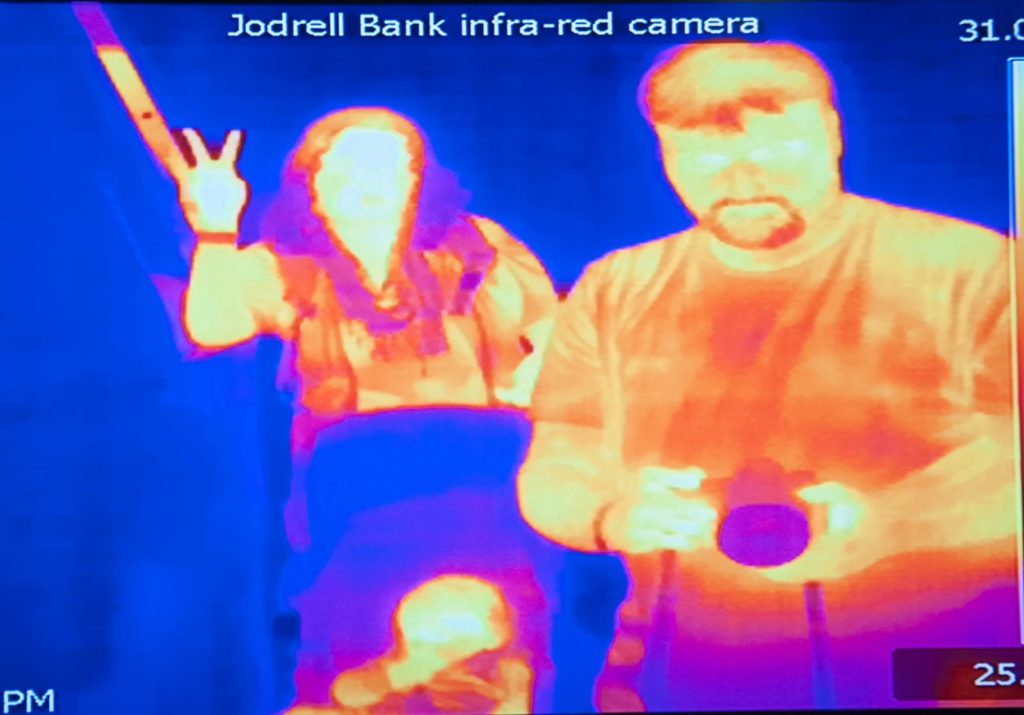
Temperature determines what kind of light something emits:
- Cold objects (like interstellar gas) glow in radio and infrared
- Warm objects (like people) glow in infrared
- Hot objects (like stars) glow in visible light
- Extremely hot objects (like black hole surroundings) emit X-rays and gamma rays
This is why the night sky looks the way it does. Most of the universe is simply too cold — or too hot — to be visible to us.
Why the universe is mostly hidden
1. Our Eyes Are Limited
Human vision only detects a very narrow range of wavelengths — the “visible” part of the spectrum. Everything else is effectively hidden unless we use instruments.
A rainbow is a natural way to view all the colours our eyes are sensitive to. But beyond the red and violet – a rainbow continues! Humans can take pictures with cameras sensitive to these colours:
Bees, butterflies, and many birds can see ultraviolet wavelengths shorter than what we can detect.
2. Dust Blocks Our View
Space isn’t empty. It’s filled with tiny dust grains — about a tenth of a micrometre in size (much smaller than a grain of sand).
These grains are very good at blocking visible light. That’s why the Milky Way contains dark lanes where stars seem to vanish.
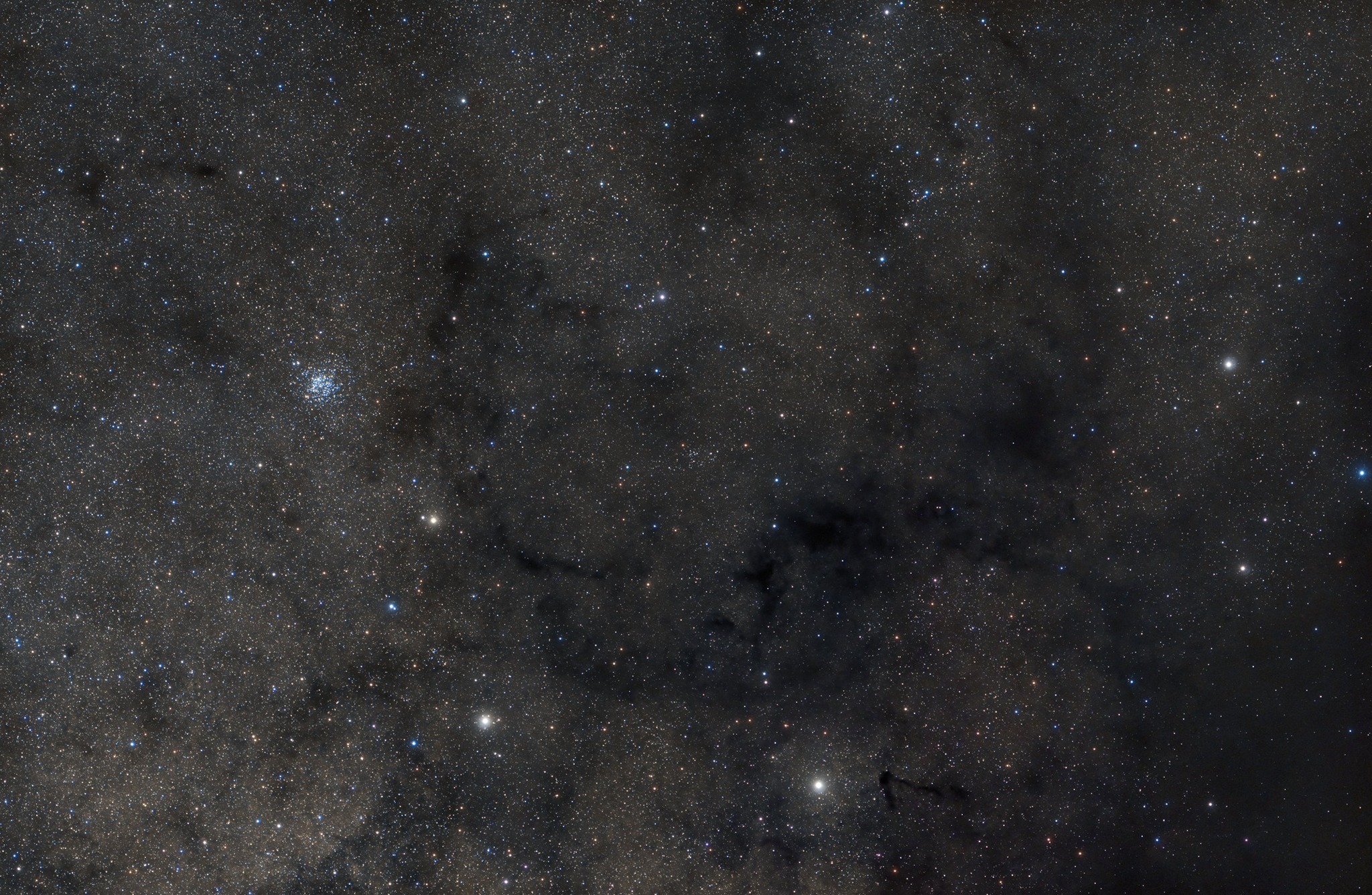
But here’s the key: dust doesn’t block all wavelengths equally.
- Visible light is easily scattered and absorbed
- Infrared light passes through much more easily
This means that entire regions of space — including where stars are being born — are completely hidden in visible light, but revealed in infrared.
Seeing the visible: Infrared Astronomy
Infrared astronomy has transformed our understanding of the universe.
Because infrared light can pass through dust, it allows us to see:
- Stellar nurseries – where new stars are forming
- Planet-forming discs around young stars
- The centre of our galaxy, normally hidden behind thick dust
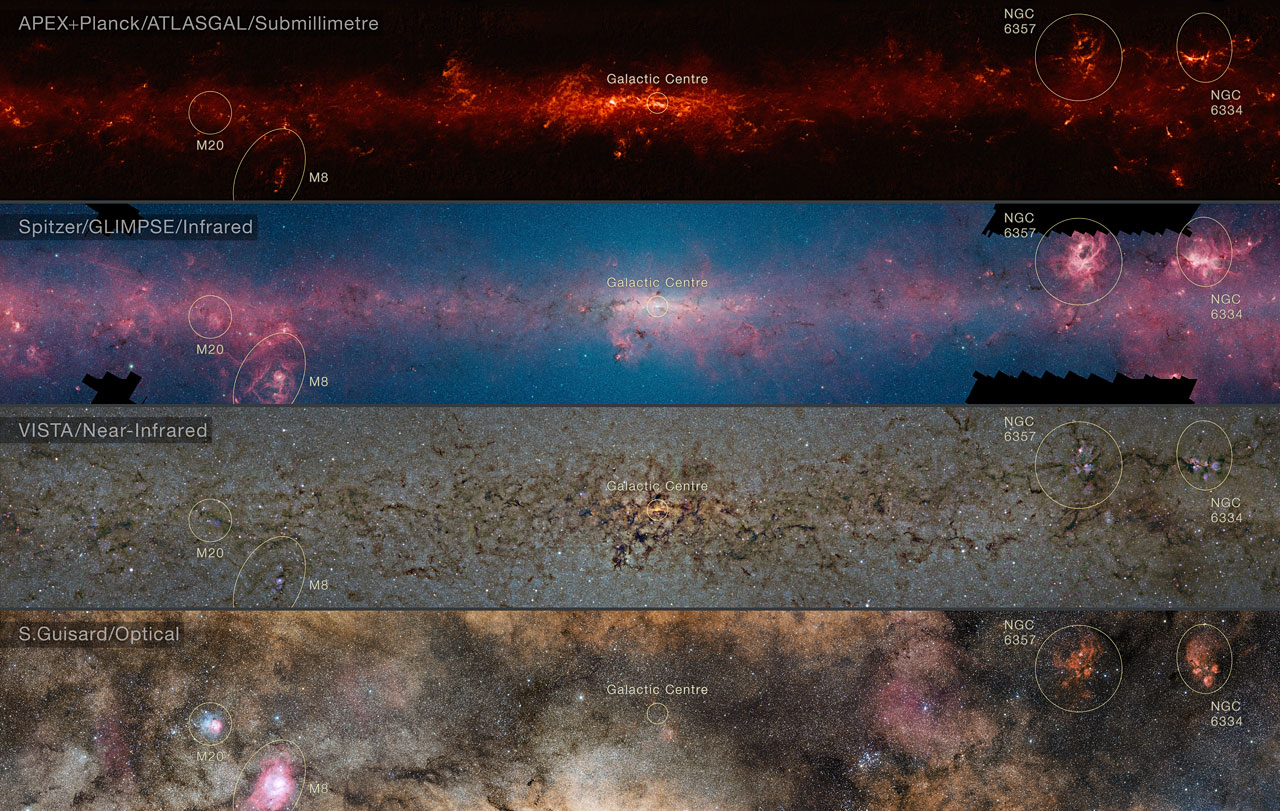
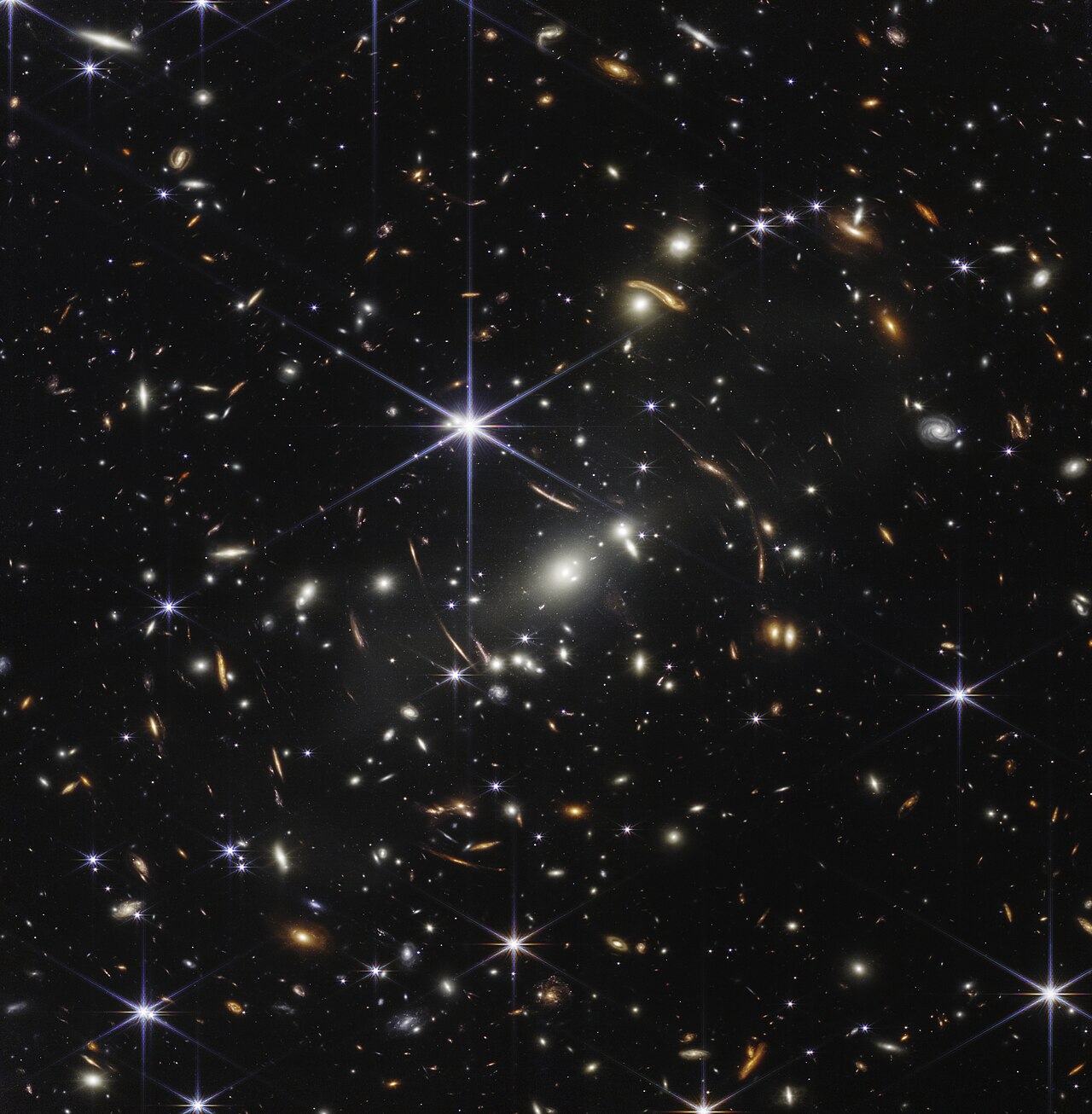
It has also revealed objects we didn’t even know existed, such as brown dwarfs — “failed stars” too small to sustain nuclear fusion. These objects glow almost entirely in infrared, making them nearly invisible to traditional telescopes.
Modern observatories like the James Webb Space Telescope are designed specifically to detect this kind of light, allowing us to peer deeper into space — and further back in time — than ever before.
Radio astronomy: a noisy sky
Radio astronomy began almost by accident in the 1930s, when engineer Karl Jansky detected a mysterious hiss coming from space.
That hiss turned out to be radio waves from the Milky Way.
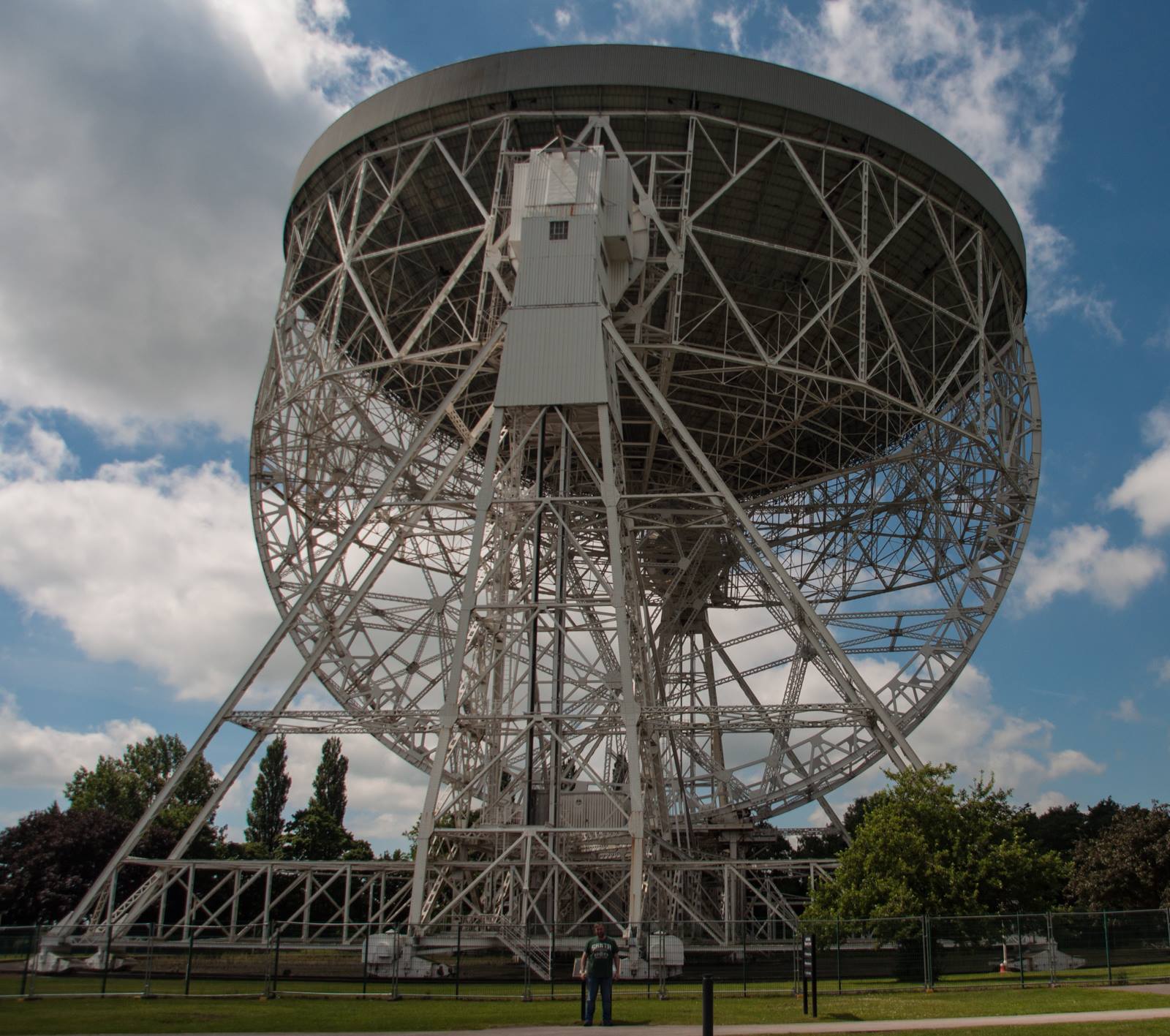
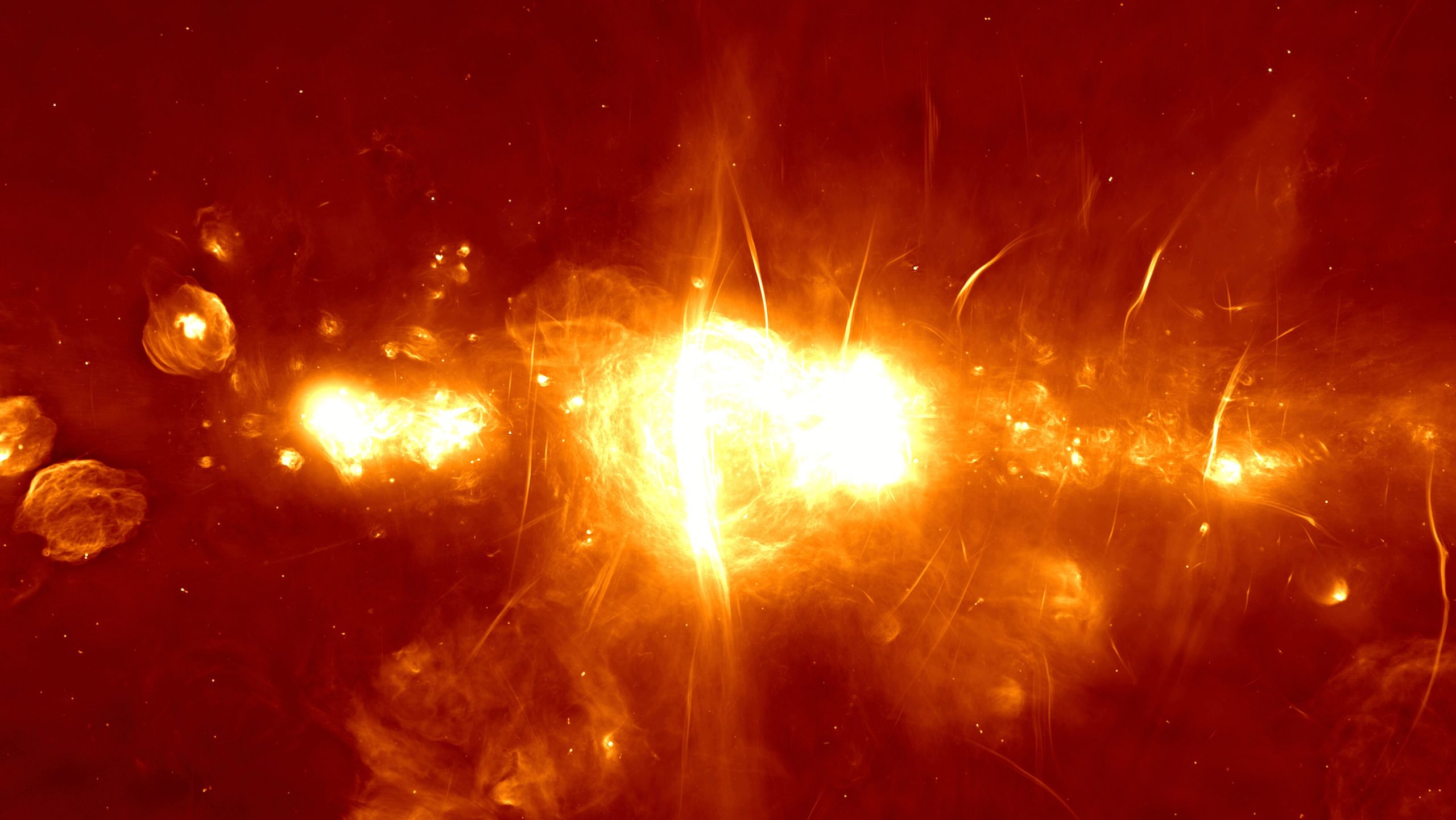
Unlike visible light, radio waves pass straight through dust, revealing structures we can’t otherwise see. Using radio telescopes, astronomers discovered:
- The spiral structure of our galaxy
- Vast clouds of hydrogen gas
- Galactic magnetic fields
- Pulsars — rapidly spinning neutron stars acting like cosmic clocks
Radio observations also gave us one of the most important discoveries in science: the Cosmic Microwave Background — a faint glow left over from the Big Bang itself.
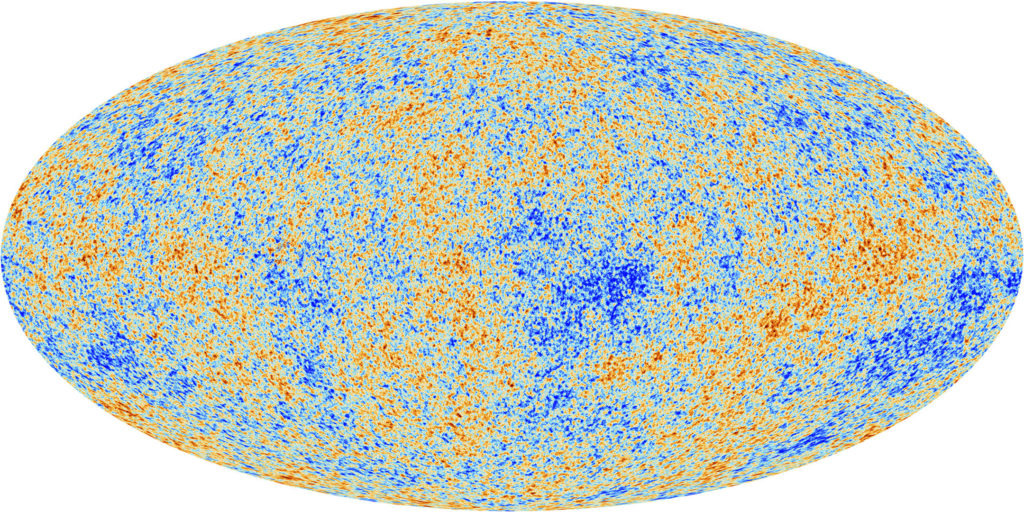
Astronomers continue to analyse structure and patterns in the CMB radiation to test theories about the earliest moments after the Big Bang.
The High-Energy Universe
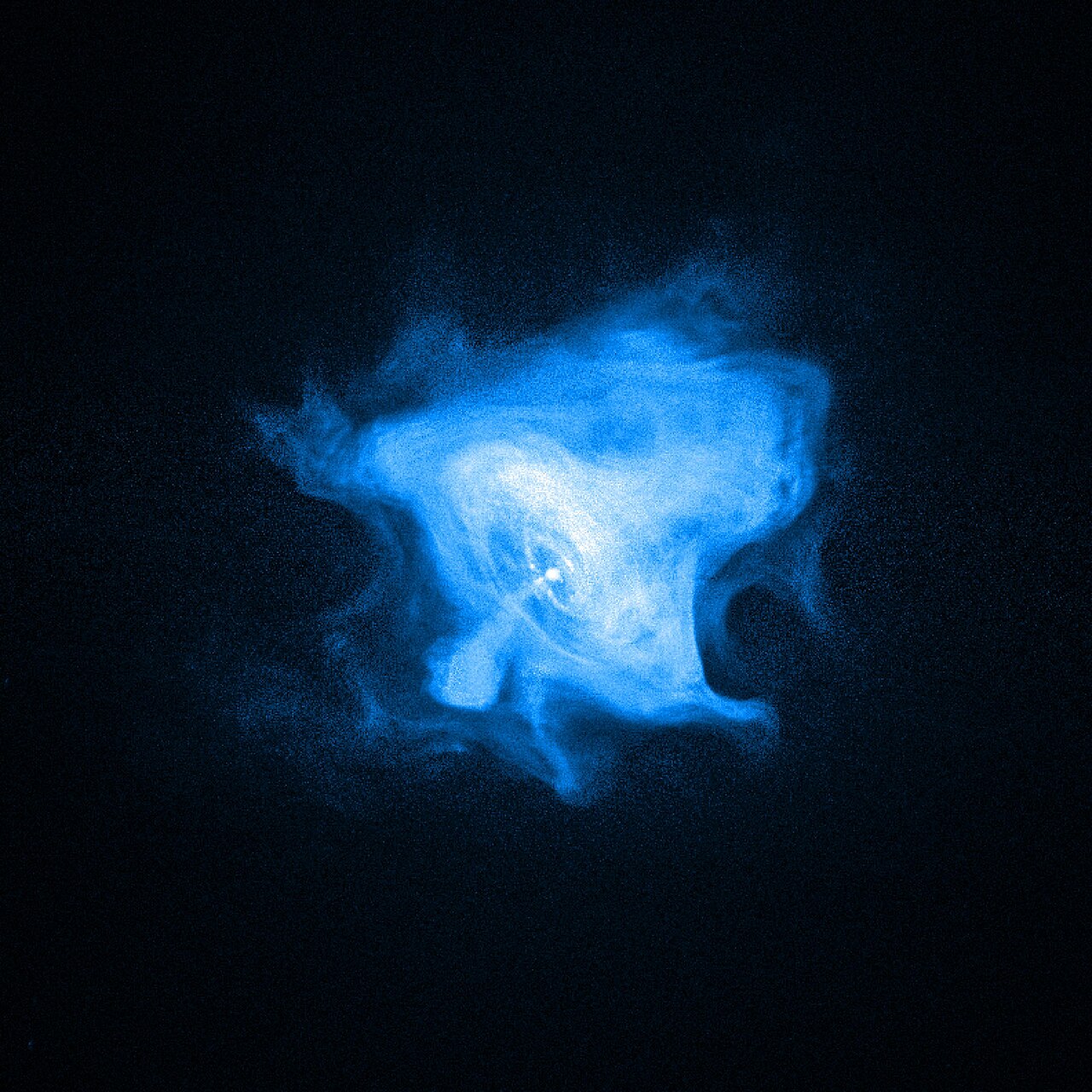
At the other end of the spectrum lie X-rays and gamma rays — the most energetic forms of light.
These reveal the universe at its most extreme:
- Black holes pulling in matter at incredible speeds
- Neutron stars — ultra-dense remnants of exploded stars
- Galaxy clusters filled with gas millions of degrees hot
- Gamma-ray bursts — the most powerful explosions known
These are not gentle, glowing objects. This is the universe as it collides, tears, and explodes.
A Universe of Many Colours
Astronomers often combine data from different wavelengths into a single image using “false colour”.
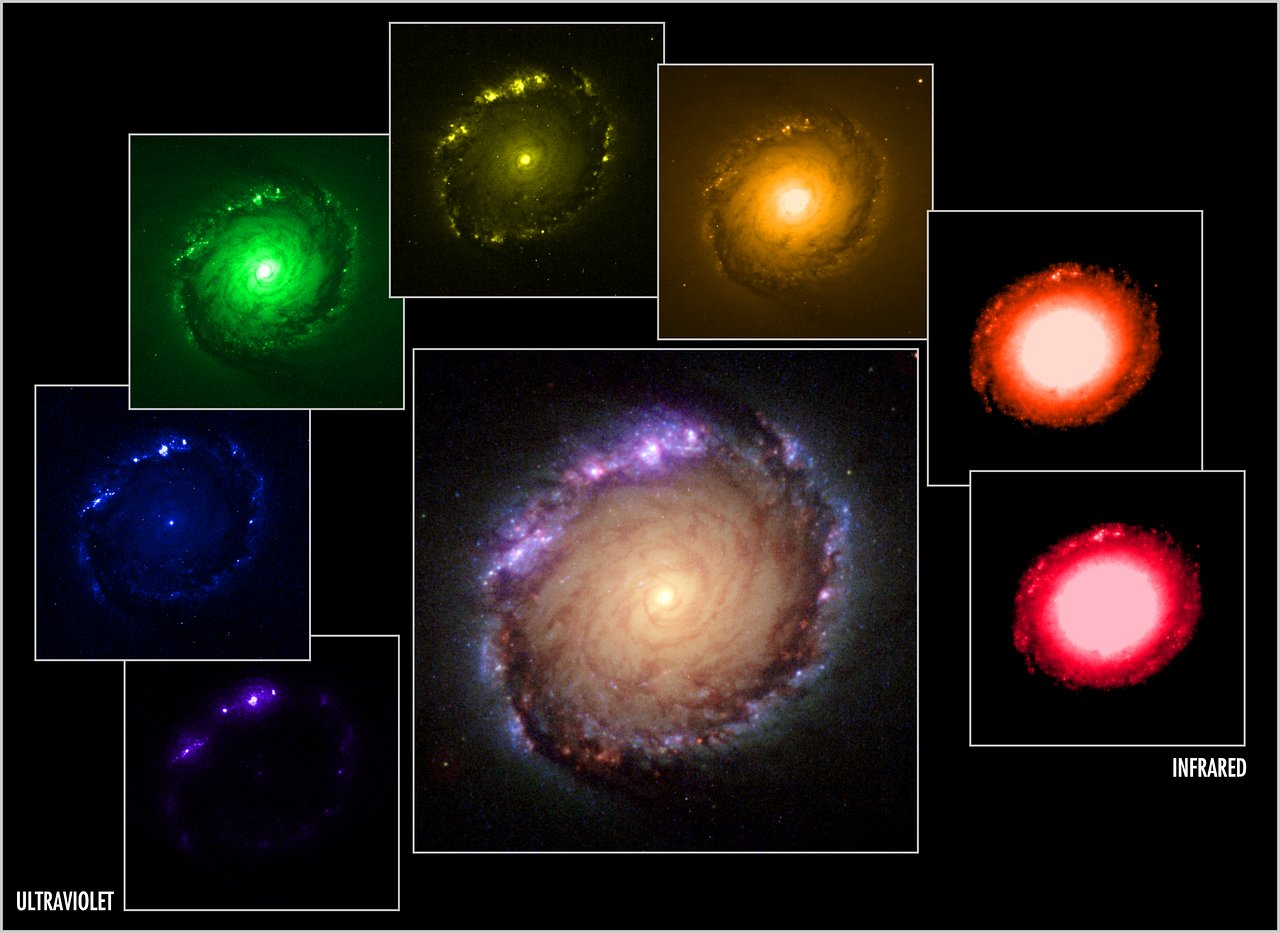
This doesn’t show what something would look like to the human eye. Instead, it reveals physical information — such as temperature, energy, or composition.
For example:
- Red might represent cooler material
- Blue might represent hotter, more energetic regions
These images are not just beautiful — they’re packed with meaning.
Why this matters
When you look up at the night sky from a dark place like Northumberland, you’re seeing only a fraction of what’s there.
Behind the stars you can see:
- Cold clouds quietly forming new suns
- Dust glowing softly in infrared
- Radio waves tracing invisible magnetic fields
- X-rays marking the presence of black holes
- Microwave radiation echoing from the birth of the universe
Every wavelength reveals a different story. Optical telescopes are no longer enough. These days look and listen to universe.
The Bigger Picture…
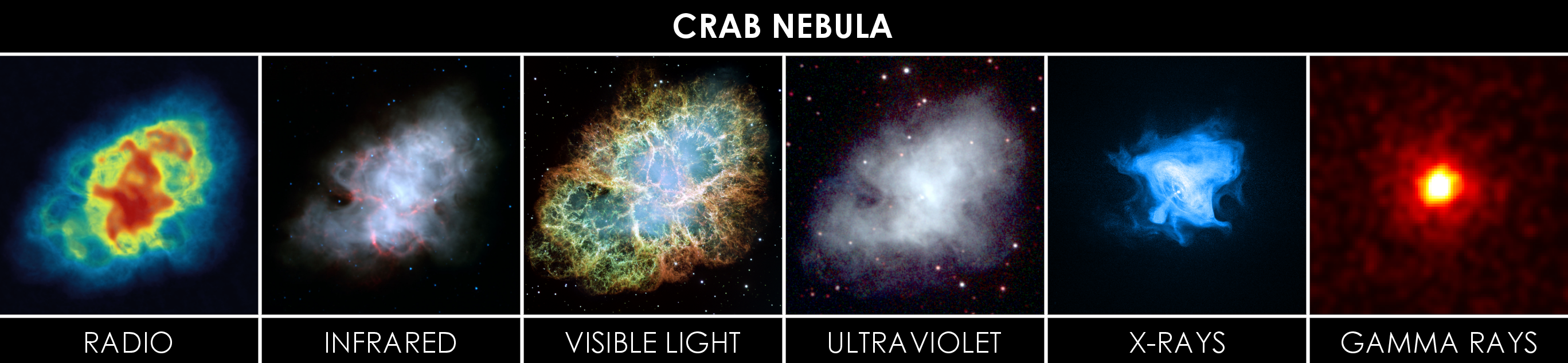
The key idea is simple but profound: There is no single “true” view of the universe.
What we see depends entirely on how we look. By expanding our vision beyond visible light, astronomers have transformed our understanding of the cosmos. We now know that:
- Stars are born hidden inside dust clouds
- Galaxies are shaped by invisible gas and magnetic fields
- The universe itself glows faintly from its earliest moments
- Much of the mass in the universe is invisible (dark matter)
In short, the universe is far richer — and stranger — than it appears at first glance.
Looking up…and beyond!
Next time you stand under a dark sky, take a moment to think about what you’re really seeing.
The starlight reaching your eyes has travelled for years, centuries, even millennia. But it’s only one part of the story.
All around you, unseen:
- Infrared light is streaming through dust
- Radio waves are passing silently overhead
- Microwaves from relic radiation of the Big Bang is streaming through your body
- High-energy radiation is marking distant cosmic violence
You are standing in the middle of a universe alive with signals — most of them invisible.
And that’s what makes the night sky so special.
Not just what you can see…
…but everything you can’t.
Wishing you clear skies,
Dr Adrian Jannetta FRAS
Further links